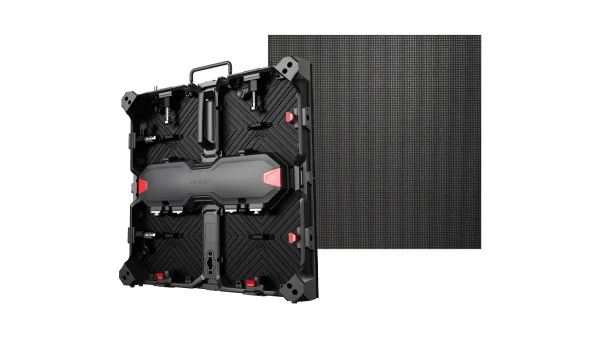
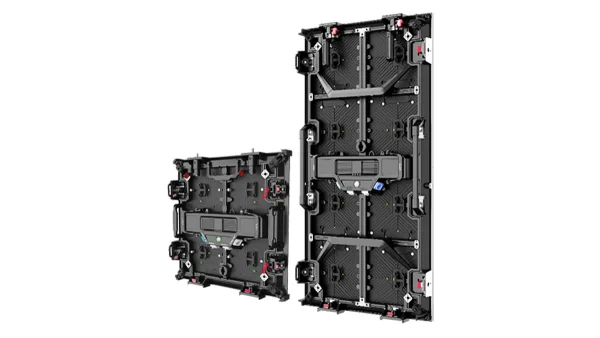
ทีวี LED COB ออลอินวัน
  จอแสดงผล LED แบบยืดหยุ่น
  จอแสดงผล LED แบบโปร่งใส
  โปสเตอร์ไฟ LED
  จอแสดงผล LED ทรงกลม
  จอแสดงผล LED ที่สร้างสรรค์และออกแบบตามสั่ง
 A จอแสดงผล LED เช่าเวที that works in a warehouse demo and one that survives road transport, rapid assembly, variable weather, and fast teardown are two different products. This guide covers the operational parameters that experienced event integrators and rental companies actually care about — from pixel pitch selection and brightness requirements to setup speed and serviceability.

- Pixel pitch for stage is the most forgiving in LED applications — audiences sit 10–30m away. P3–P5 covers most shows. But there are exceptions where finer pitch matters.
- Brightness is not one number. Indoor stage (800–1,200 nits), covered outdoor (2,500–3,500 nits), direct-sun outdoor (5,000–6,500 nits). Buying the wrong brightness class means either a dim screen or wasted budget.
- Setup speed is the real constraint on show day. Panel-to-panel connection time, rigging complexity, and post-assembly calibration determine whether a 200sqm wall goes up in 4 hours or 10.
- Weight per square metre — not per panel — is the correct metric for transport cost, rigging load, and crew fatigue. A 4kg/m² difference across 200sqm is 800kg of extra weight in the truck.
ความเร็วในการติดตั้ง: เหตุใดจึงเป็นข้อจำกัดที่แท้จริงในวันจัดแสดง
Concert halls, conference centres, and event venues have setup windows — typically 4–8 hours from truck unload to show-ready. For large LED configurations of 200+ square metres, this is a demanding timeline. Setup speed determines whether it is achievable.
Four factors determine how fast a crew can build a stage rental LED กำแพง:
1. Panel-to-panel connection time
How many steps does it take to connect two panels? Products that integrate mechanical latching, signal connection, and power connection into a single two-step operation are significantly faster than designs requiring three separate steps. A timed demonstration with a real crew reveals more than any spec sheet claim.
2. Rigging system complexity
Flying configurations — panels suspended from truss — require fast, repeatable rigging hardware. Curved configurations require adjustable connectors. The rigging hardware design has as much impact on setup time as the panels themselves. A poorly designed hanging bar that takes 4 minutes to secure per panel adds nearly 7 hours of labour on a 100-panel wall.
3. Calibration requirement post-assembly
Does the system require panel-by-panel recalibration each time it is assembled, or does factory calibration hold across assembly cycles? Products with stable inter-panel calibration — especially those shipped as a matched-set calibrated batch — save significant time during load-in. This is one of the most underestimated advantages of matched-set calibration in จอแสดงผล LED เช่า ผลิตภัณฑ์
4. Crew size requirement
Some panel designs require two to four people to handle safely. Lighter panels can be handled by one person. On a setup with 300 panels, this difference compounds across the crew roster and labour budget.
An experienced two-person crew should be able to assemble approximately 50 square metres of rental LED in two hours with an optimised product. If a product cannot approach this rate after training, it will create setup window problems on show day.
Weight & Portability: The Math That Adds Up Over a Touring Season
Every kilogram of panel weight is a kilogram that gets loaded, transported, unloaded, rigged, and de-rigged by human labour at every show. On a touring schedule of 40+ shows per year, weight differences that look small on a spec sheet compound into real operational costs.

Standard rental LED cabinets range from 7 kg to 14 kg per 500×500mm panel. On a 200sqm installation with 800 panels, the difference between 8 kg and 12 kg panels is 3,200 of total system weight.
- More road cases and larger transport vehicles
- Higher rigging load requirements and truss costs
- Increased crew fatigue and injury risk
- Longer load-in and load-out times per show
The metric that matters: weight per sqm, not per panel
Panels with larger cabinet sizes may weigh more individually but less per square metre. Weight per square metre — including all rigging hardware and connectors — is the correct specification to compare across products.
- Weight per sqm — all-in including connectors and fly bar hardware
- Road case configuration — panels per case, case weight when loaded
- Total truck pack volume per 100sqm — not just panel dimensions
- Is the spec sheet weight verified against production units, or is it a marketing estimate?
Pixel Pitch Selection for Stage: One Simple Rule
Stage rental has the most forgiving viewing distance requirements of any LED application — audiences are typically 10–30 metres from the screen. This gives you more flexibility than a control room (1–3m viewing) or a retail display (2–5m).
The practical rule: minimum viewing distance (metres) ÷ 1.5 gives a reasonable maximum pixel pitch in millimetres for stage applications.
| Stage Application | ระยะการรับชมโดยทั่วไป | ระดับเสียงที่แนะนำ | ทำไม |
|---|---|---|---|
| General audience stage | 10–30ม | P3.0 - P5.0 | Cost-effective. Pixels invisible at audience distance. |
| IMAG / close-proximity screens | 3–5ม | P2.5 - P3.0 | Visible clarity improvement at close range for camera feeds |
| Broadcast / camera-facing | Camera dependent | P2.5 หรือละเอียดกว่านั้น | Avoid moiré patterns. High refresh rate essential (≥3840Hz) |
| เวทีหลักของเทศกาลกลางแจ้ง | 10–40ม | P3.9 - P4.8 | Significantly lower cost per sqm. Audience distance makes finer pitch invisible. |
| xR / virtual production | Camera focus distance | P1.5 - P2.6 | Camera sees individual pixels. Requires high refresh, DCI-P3 colour, Brompton. |
The highest-value pitch decision for rental is usually a consistent set of products that can be combined into different configurations — rather than optimising each event separately. A rental inventory built around one or two pitch options that cover 80% of your typical bookings delivers better ROI than trying to stock every pitch for every possible gig.
See how our four rental LED series map to different stage applications on the ศูนย์รวมผลิตภัณฑ์จอ LED ให้เช่า.
Brightness by Venue Type: Indoor Stage to Outdoor Festival
A จอแสดงผล LED เช่าเวที that runs at 800 nits indoors may be completely invisible outdoors in direct afternoon sun. Brightness is not one spec — it is a requirement that changes with the venue. Buy the wrong class, and you either have a dim screen the client complains about, or you paid for brightness you never use.
Indoor vs outdoor rental LED brightness — 1,000 nits indoor stage vs 6,500 nits outdoor festival in direct sun
- Brightness needed: 800–1,200 นิต
- Controlled lighting environment
- Content visible at 800 nits standard
- Higher brightness adds heat, not value
- ผลิตภัณฑ์ที่ตรงกัน: Lite Series P2.6, Matrix 500 P2.6
- Brightness needed: 2,500–3,500 นิต
- Ambient light through tent fabric or open sides
- 1,200 nits will wash out in daytime
- ผลิตภัณฑ์ที่ตรงกัน: X-1000 P3.0, Matrix 500 P2.9 Outdoor
- Brightness needed: 5,000–6,500 นิต
- Direct afternoon sun on the screen face
- 3,500 nits is insufficient for midday shows
- ผลิตภัณฑ์ที่ตรงกัน: X-1000 P3.9, Matrix 500 P3.9 Outdoor IP65
If your inventory needs to move between indoor and outdoor venues, specify the IP65 outdoor version and run it at reduced brightness indoors. A product like Matrix 500 P3.9 Outdoor at 6,500 nits can run at 30–50% brightness for indoor shows — giving you one product that covers every venue type without doubling your capital outlay.
Signal Reliability & On-Site Serviceability: What Happens Mid-Show
Show-critical signal loss is unacceptable. A จอแสดงผล LED เช่า system must handle signal redundancy and on-site module replacement without stopping the event.
Signal redundancy that matters for live events
Primary and backup signal paths with automatic failover. The system should recover from signal path failure without visible interruption — not just claim redundancy on a spec sheet.
For large stages where signal runs are long, fibre signal options reduce noise and allow longer cable runs without degradation. Standard on Brompton Tessera systems.
How many panels can be in a single signal chain before quality degrades? Longer chains require less cabling and fewer signal distribution units — speeding up setup.
Can a panel be replaced mid-show without interrupting neighbouring panels? Front-service modular designs should support this — confirm before relying on it.
On-site serviceability: front-access is not optional
Technicians cannot go behind a flying LED wall during a show. Front-service module replacement is mandatory for any stage rental LED product expected to be serviced in operation. A module replacement — from identifying the failed unit to having it running again — should take under 5 minutes with trained crew.
Standard practice for rental is 2–3% spare modules by count. Plan for this in your inventory budget — not as an afterthought.
All four DOIT VISION rental LED series feature front-service module access. See the full rental product comparison for service access specifications.
Impact Resistance: The Hidden Cost in Rental Operations
Rental LED panels take physical abuse. Road transport vibration. Uncareful handling during load-in. Panels being set down on hard surfaces. Operators standing on flight cases to reach upper rigging positions. The question is not whether damage will occur — it is how much damage, and how it manifests in your maintenance budget.
The impact resistance hierarchy
Can the cabinet survive a 1-metre drop onto a hard floor without deforming? This is the test that separates quality rental products from those optimised for cost. CNC magnesium alloy locking mechanisms rated for 200+ cycles are the standard — not stamped steel that loosens after a touring season.
SMD LEDs are individually vulnerable to impact — a sharp knock can dislodge a lens or damage a solder joint. Recessed or spring-loaded cabinet connectors with protective guards are significantly more durable than protruding connectors in rental conditions.
Corners and edges take the most damage in handling. Quality rental products have reinforced corner treatment — foldable corner protectors on the cabinet or silicone-edged flight case foam — that absorbs impact rather than transferring it to the panel.
ATA-spec butterfly-opening flight cases with foam-cut interior, stackable, with cabinet count labelled per case. Carton packing is not road-ready for touring equipment that does 40+ shows a year.
A German rental company running Matrix 500 P3.9 panels across a 30-date European festival tour reported zero cabinet flatness failures across four years of weekly deployment cycles in 12 European countries. The difference between a product engineered for the road and one that looks good in a showroom shows up in year two — not week two.
For more on how our rental panels are engineered specifically for touring durability, see the rental partner programme และข้อมูลจำเพาะของผลิตภัณฑ์
Send your stage dimensions, audience layout, and venue type. An engineer replies with the right rental LED spec within 24 hours.